A hold point gets signed on the shop floor. Then it dies in a folder.
When the client asks who released the assembly, against which revision, after which coating or NDT — most fabricators are reconstructing the answer. That is slow, incomplete and expensive.
We keep the drawing in the welder’s hand. And make the complete QA record the automatic by-product.
Free to try · No card · Nothing to install · Your drawings stay yours
Every one of these was signed by somebody who did the work properly. None of them can be produced on the day it is asked for without a person going and looking.
None of that is a paperwork problem. The paperwork is fine. The problem is that paper cannot answer anything until somebody goes and reads all of it.
The supervisor uploads and hands out. The fabricator scans and signs. Nothing between them is anybody’s job.
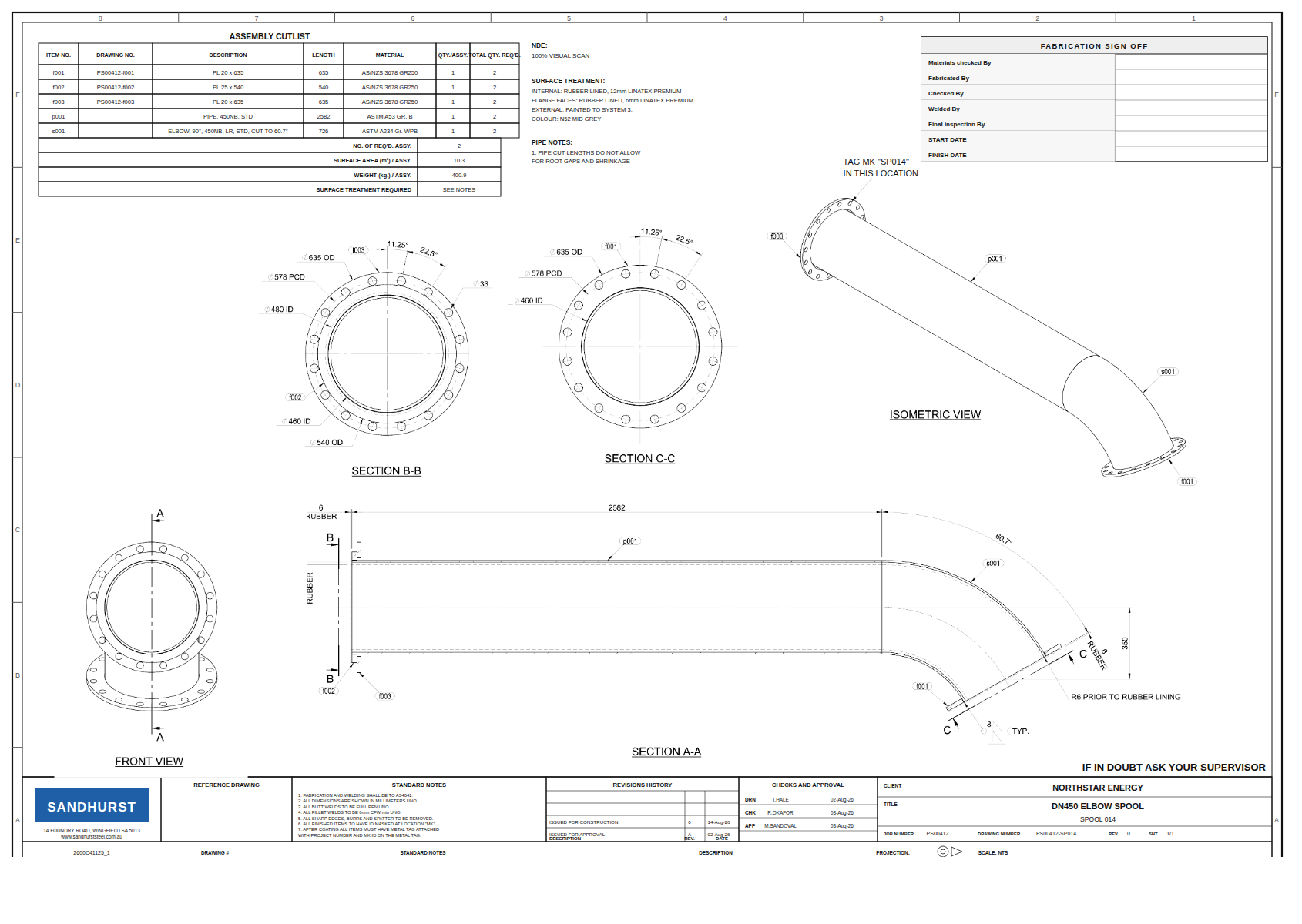
A project is created from them. Every drawing that holds witness points gets a sign-off record and its own unique QR code stamped onto it.
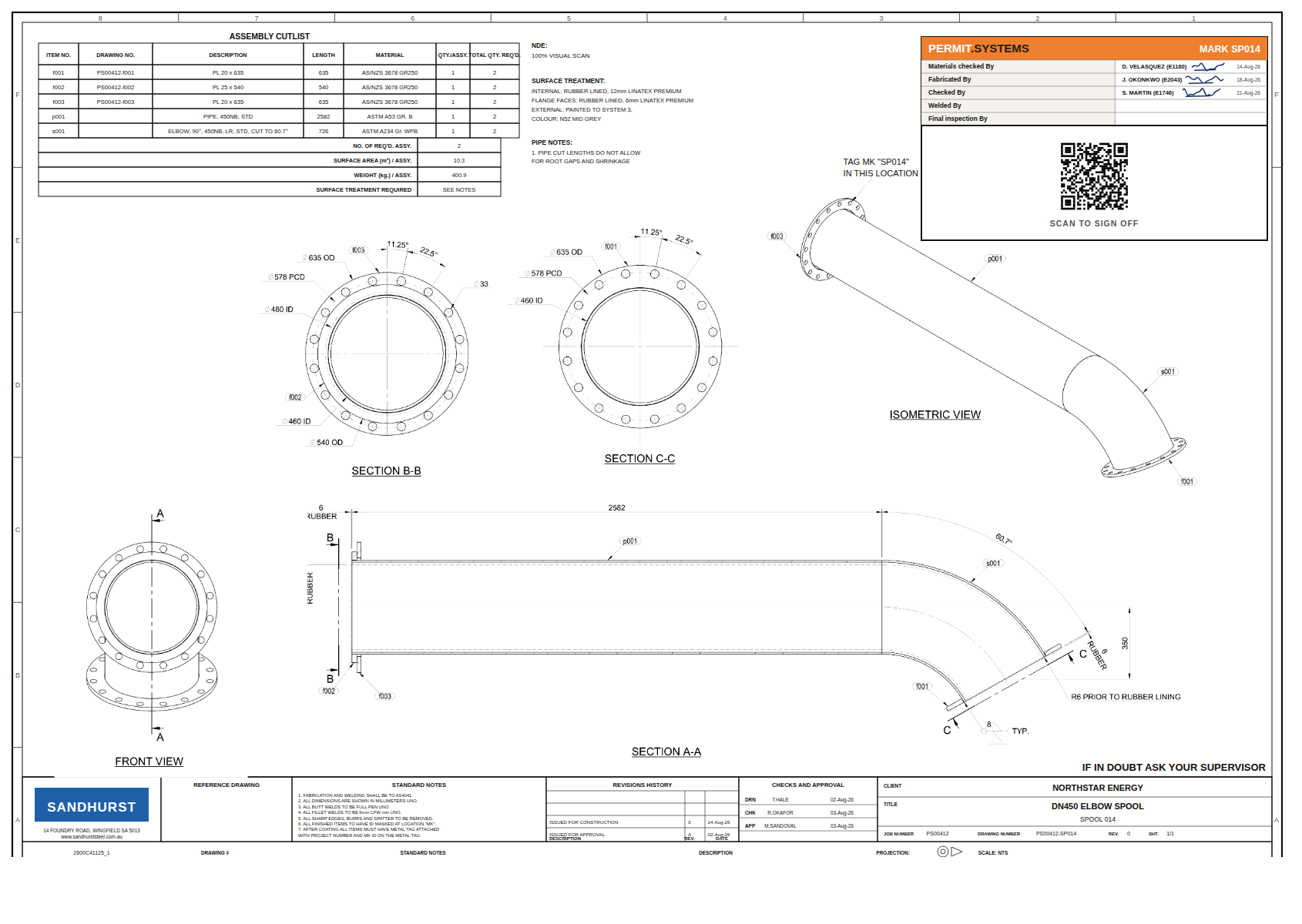
The same drawings, now carrying the code. They go to the bay on paper, the way they always did.
Digitally, on the witness point he has just finished. No login. No account. Ever. The supervisor watches it land live.
Works for fabrication, welding, coatings, NDT and final release. Built to sit inside quality systems audited to ISO 9001, ISO 3834 and AS/NZS 1554.
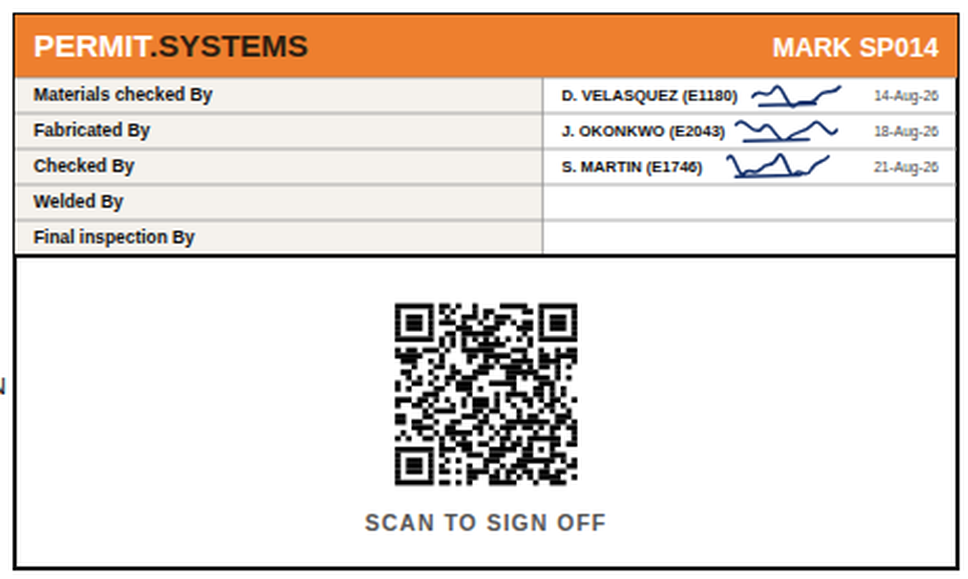
Same sheet, same drawing office, same welders. The difference is that the second one can answer a question. Every signature on it was taken on the floor, by the person who did the work, on the drawing in their hand.
No app to install. No account to create. No password anybody has to reset at 6am. He points a phone at the code on the drawing in front of him, and the only thing on screen is the hold point that is his to release.
The first sign-off takes a minute. Everything below is what you stop doing by hand, on every job after it.
Upload the reissued set and it matches by assembly mark, shows you old beside new with the changes boxed, and resets only the sheets that actually changed. The rest keep their sign-offs. A code printed on a superseded sheet refuses to be signed and says which revision is current.
A cover with the job's own code, every assembly stamped, and the signatures filled into the tables. It is the document a client asks for at handover, and it is ready before they ask.
Connect a Drive and every job gets a folder: the original drawings, each reissue, the attached WPS, ITP, mill certs and NDT reports, the stamped pack and the completion report. Replace a document here and the copy there is replaced too.
Scan a code from a printed sheet and see that the hold point was released and when — without an account, and without ever showing who signed it. Names, employee numbers and signatures stay inside the account.
Invite a supervisor with a link. They see the same jobs, drawings and sign-offs from any device. Tradesmen need none of this — they scan and sign, and they never create anything.
Drawings are held on the device as well as the platform, so a bay with no signal still opens the sheet. Sign-offs queue and catch up on their own when it comes back.
A drawing set is dozens of sheets, each with its own witness table and its own mark. Reading them by hand is an afternoon, and an afternoon is why it does not get done.
He reads, he proposes, and a supervisor confirms. He never releases a hold point and he never signs anything.
Nothing about the bay changes. The drawing stays in the welder’s hand, the signature stays his, and the pack a client asks for at handover is already built by the time they ask.
Your ITP defines the hold points; this records who released each one, when, and against which drawing revision. The software keeps the record — it does not inspect the work.
The hold-point or coating workflow you need to lock down. We reply within one business day with fit, approach and timelines.